Microscopy Practical
1
Preparing the Slide
- Take a clean, glass microscope slide
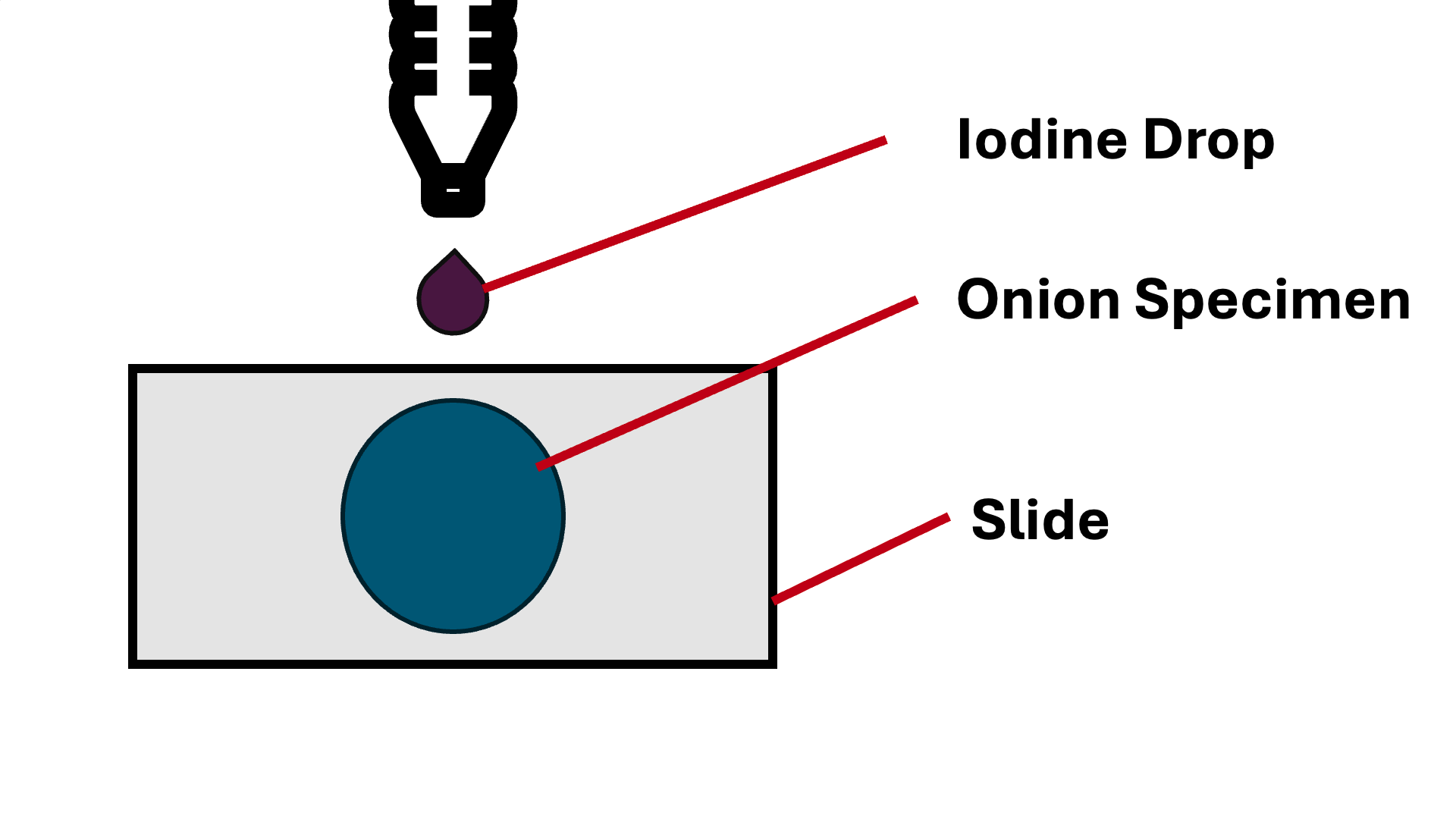
- Peel a thin layer of onion skin using your fingers or forceps or tweezers
- Place the thin layer of onion skin onto the slide
- Stain the layer of onion skin with iodine solution - this makes the onion skin more visible
- Place a cover slip over the iodine-stained layer of onion skin
Safety Concerns
- Hold slide on the edges to avoid finger marks
- Avoid iodine solution skin contact
2
Setting up the Microscope
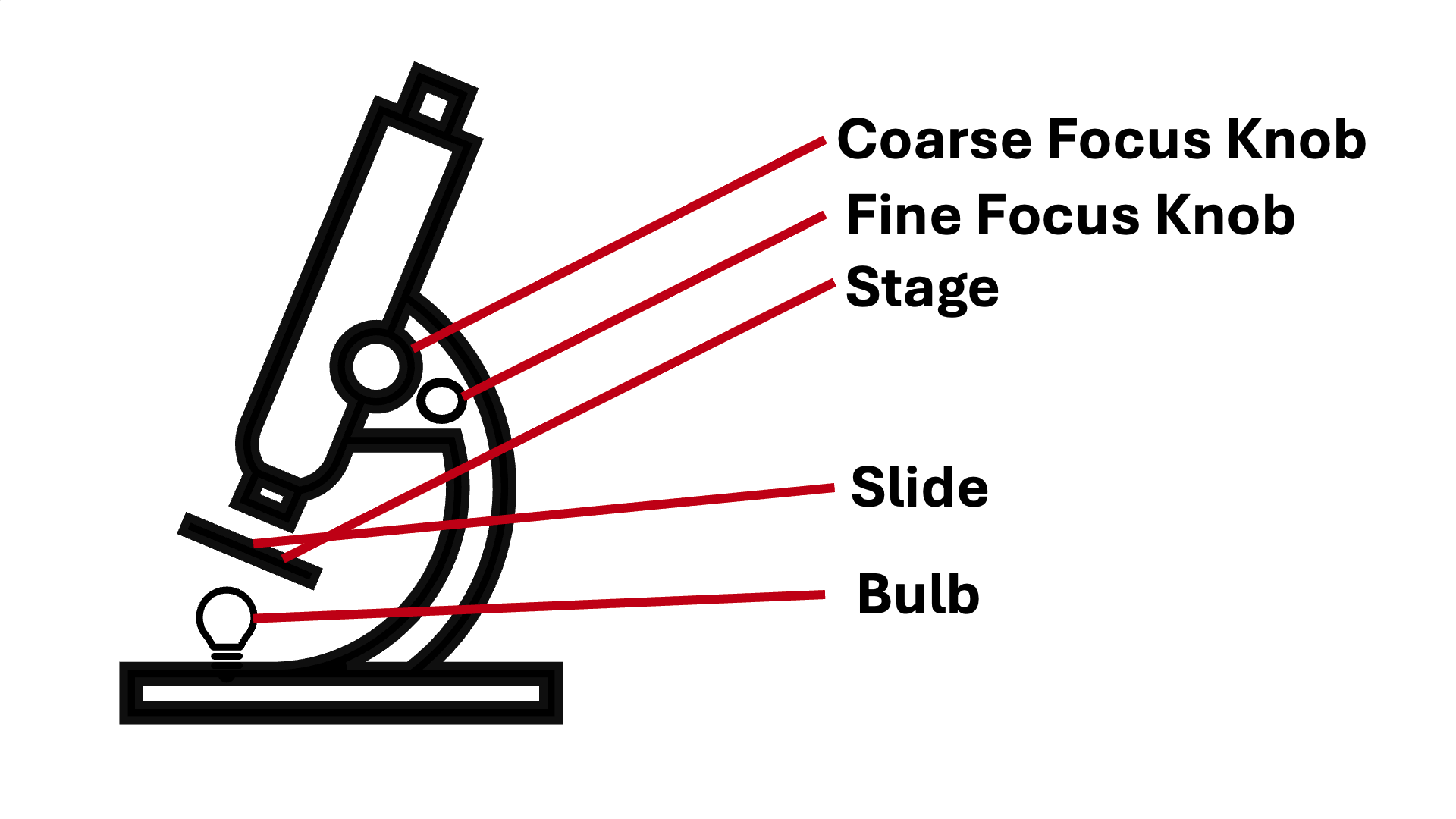
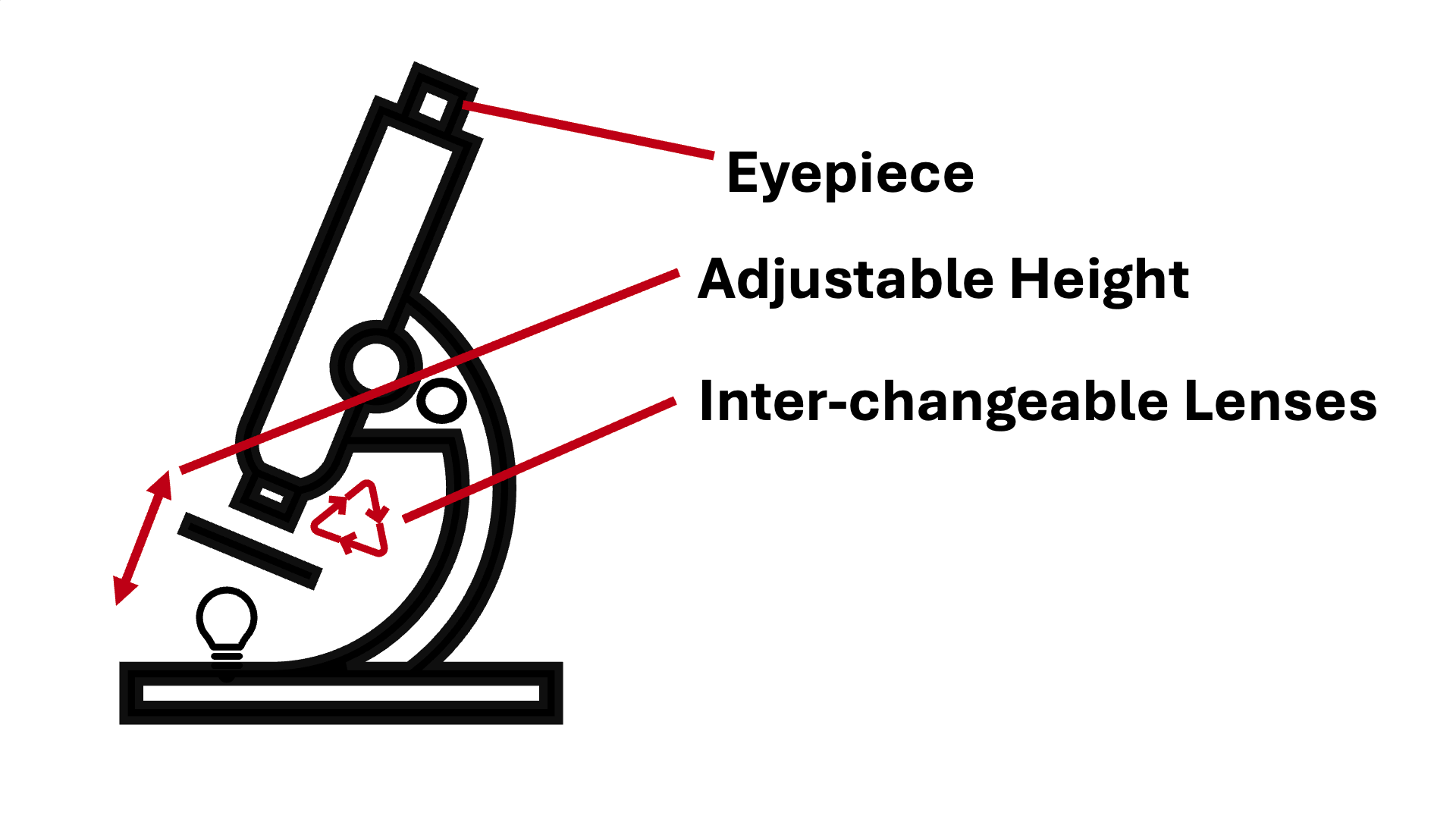
- Place the slide onto the microscope stage
- Ensure that the lens is, at first, set to the lowest magnification
- Using the coarse focus knob, twist until the stage is as close as possible to the lens
- Switch on the microscope's light
Safety Concerns
- Adjust stage height carefully - avoid contact between lens and the slide on the stage
- Do not stare directly at the light source
3
Adjusting the Focus
- Look through the eyepiece
- Using the coarse focus knob, turn until the specimen is in focus
- Using the fine focus knob, further focus the specimen
- Switch lenses to ones of higher magnification
- Use the fine focus knobs to refine focus when using the new lenses
Safety Concerns
- When switching lenses, be careful to ensure that the lens does not come into contact with the slide on the stage