Salts Practical
1
Equipment Setup
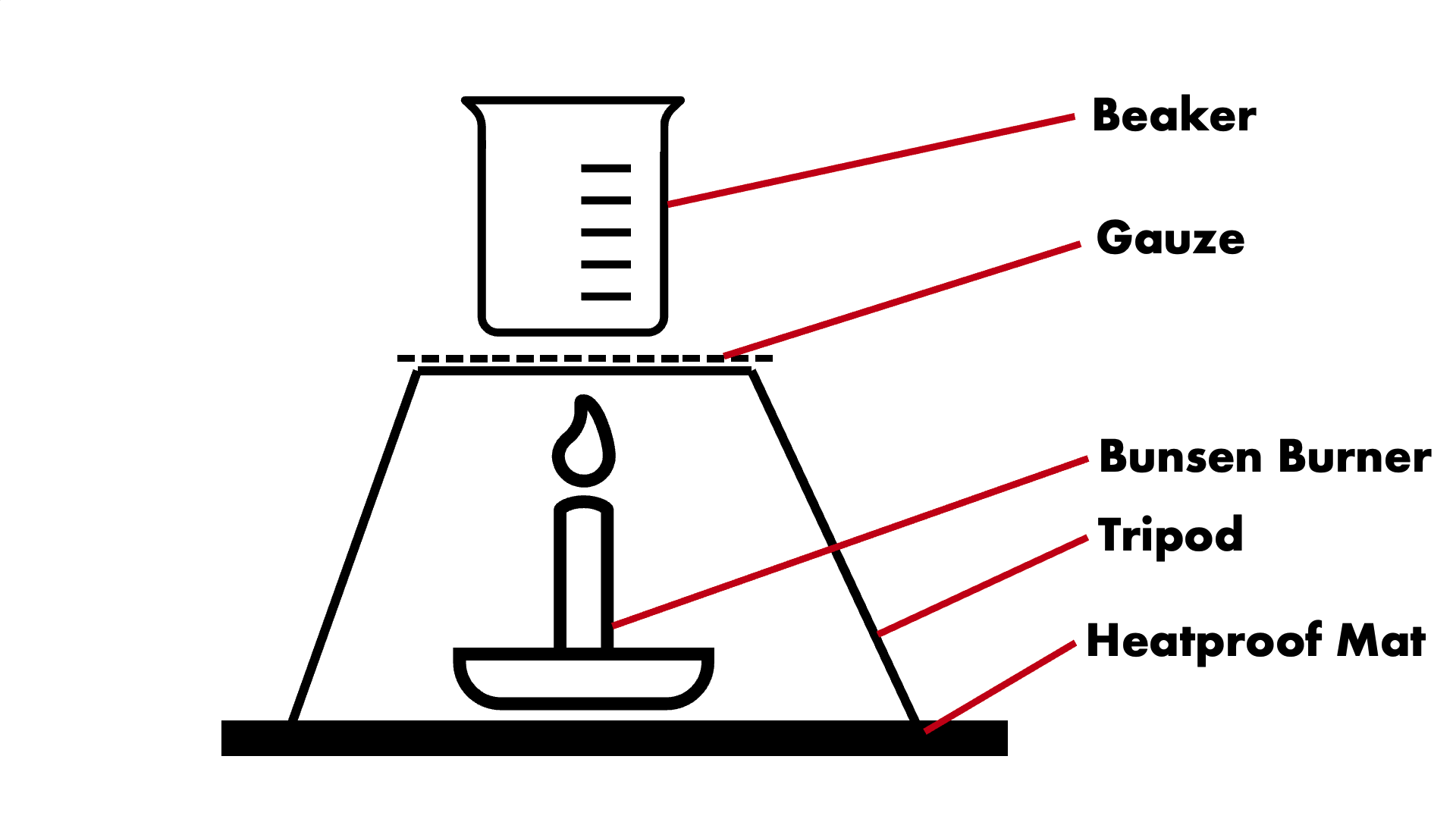
You will need: A beaker, Gauze, Tripod, Bunsen Burner, Heatproof Mat, Filter Paper, Evaporating Basin, Glass Rod
2
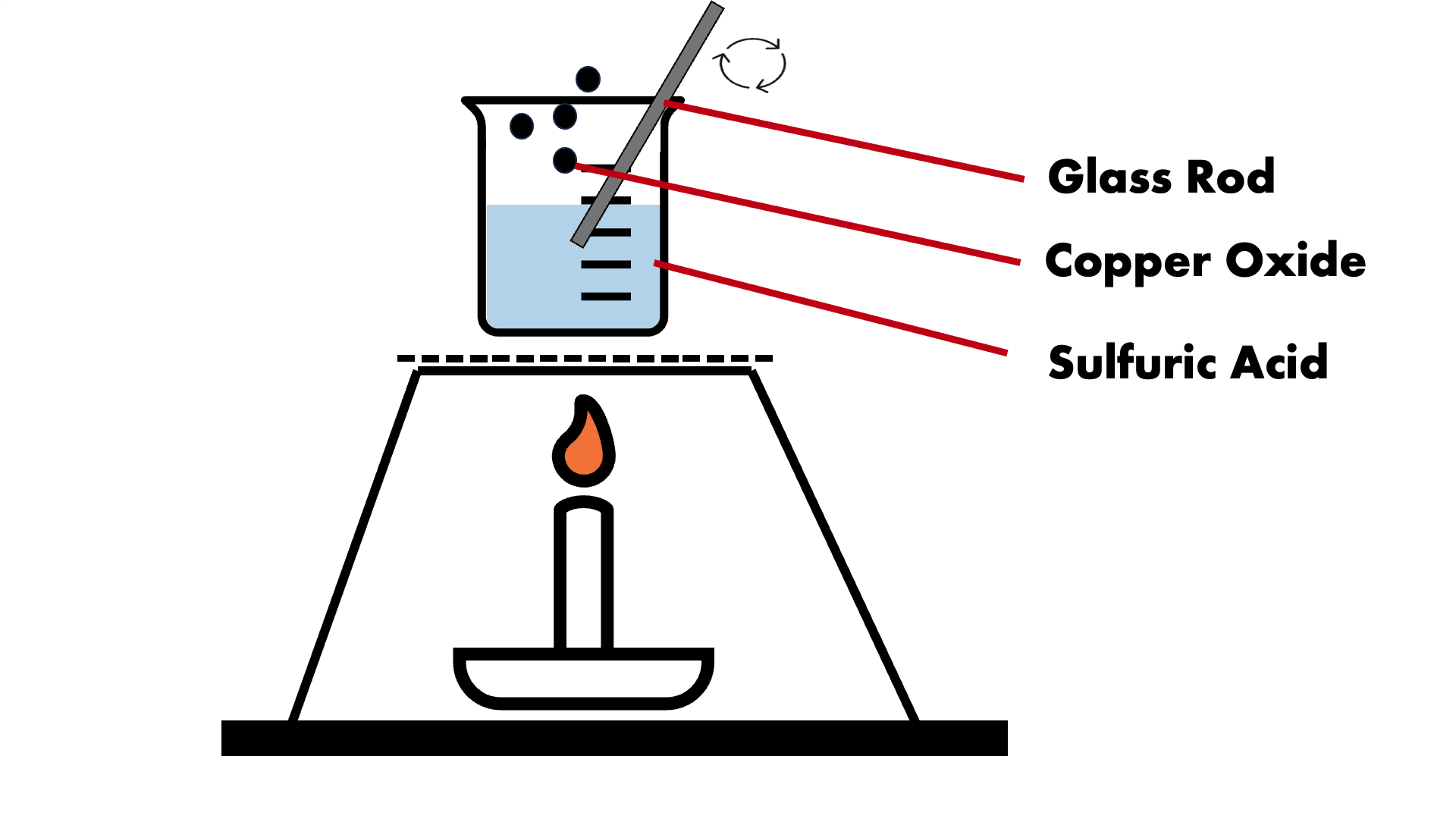
Making Copper Sulfate
- Pour Sulfuric Acid in to beaker
- Light the Bunsen Burner
- Add Copper Oxide to Sulfuric Acid
- Mix solution with a glass rod
Safety Concerns
- Sulfuric Acid is corrosive
- Take caution when using Bunsen Burner
- Glass can smash
3
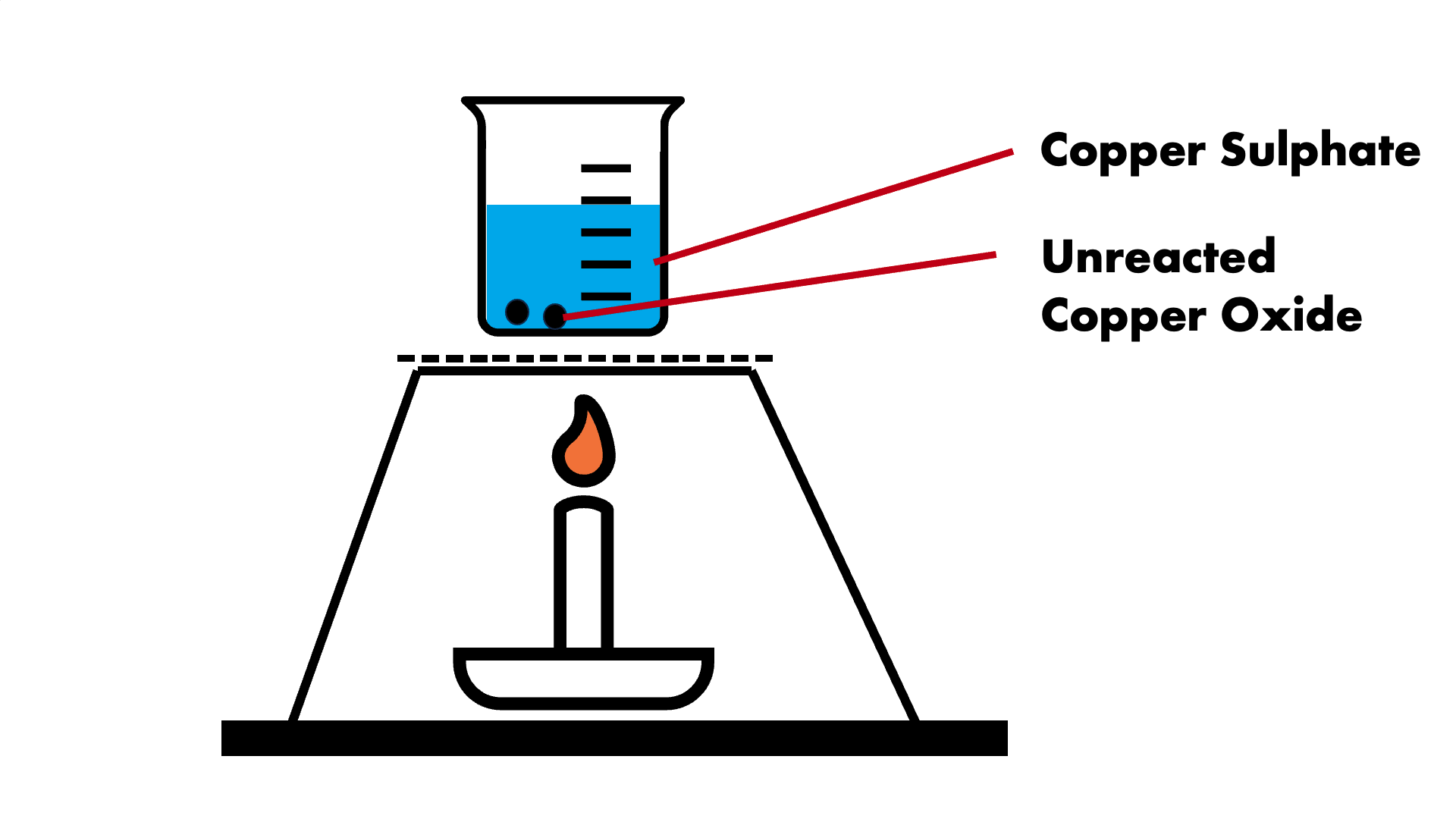
Completion of ReactionOnce solution turns blue and no more Copper Oxide will react, Copper Sulfate solution is formed.
4
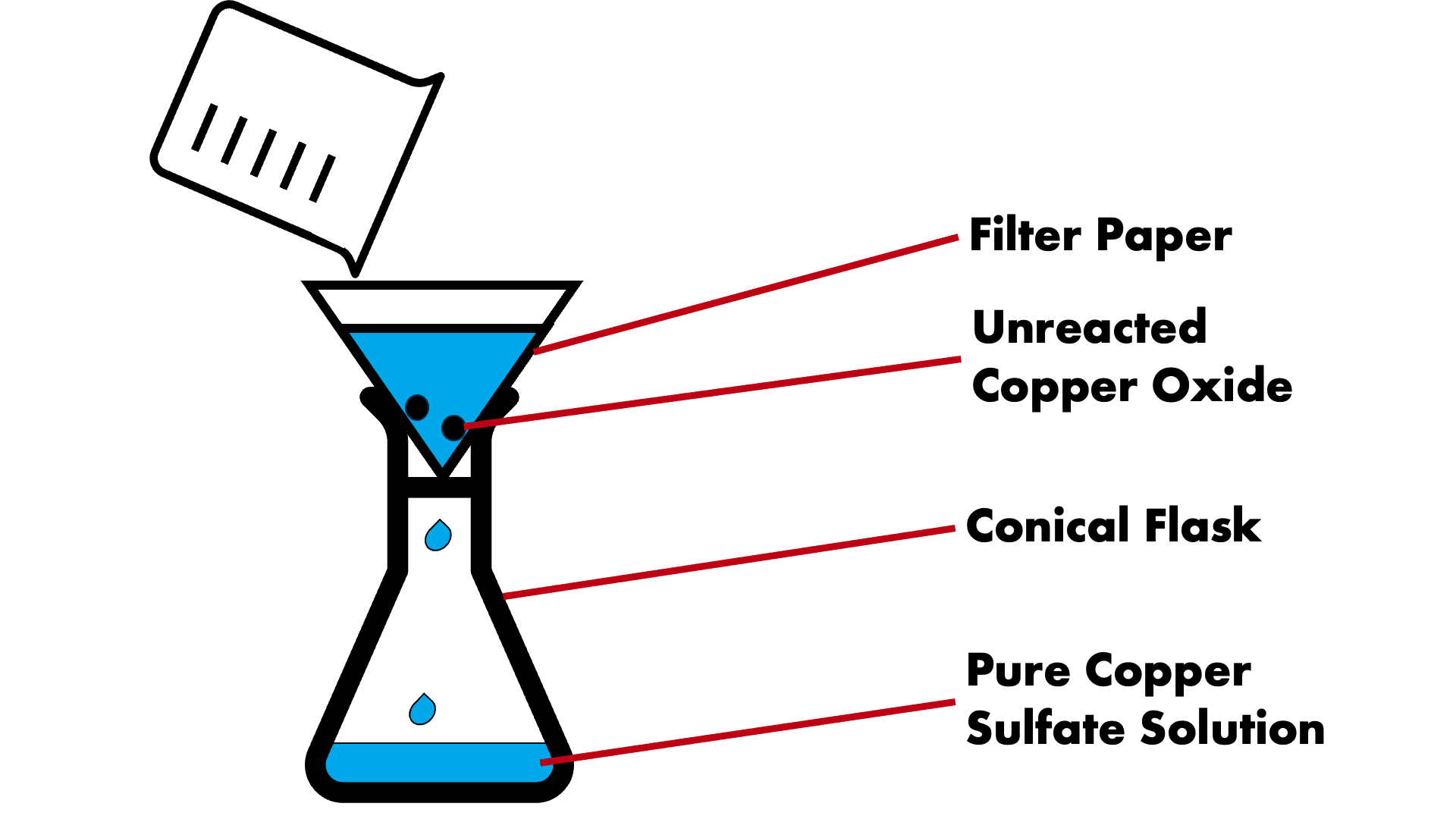
Filtration
- Set up equiptment as shown
- Pour Copper Sulfate solution into filter paper to separate Copper Oxide from Copper Sulfate
5
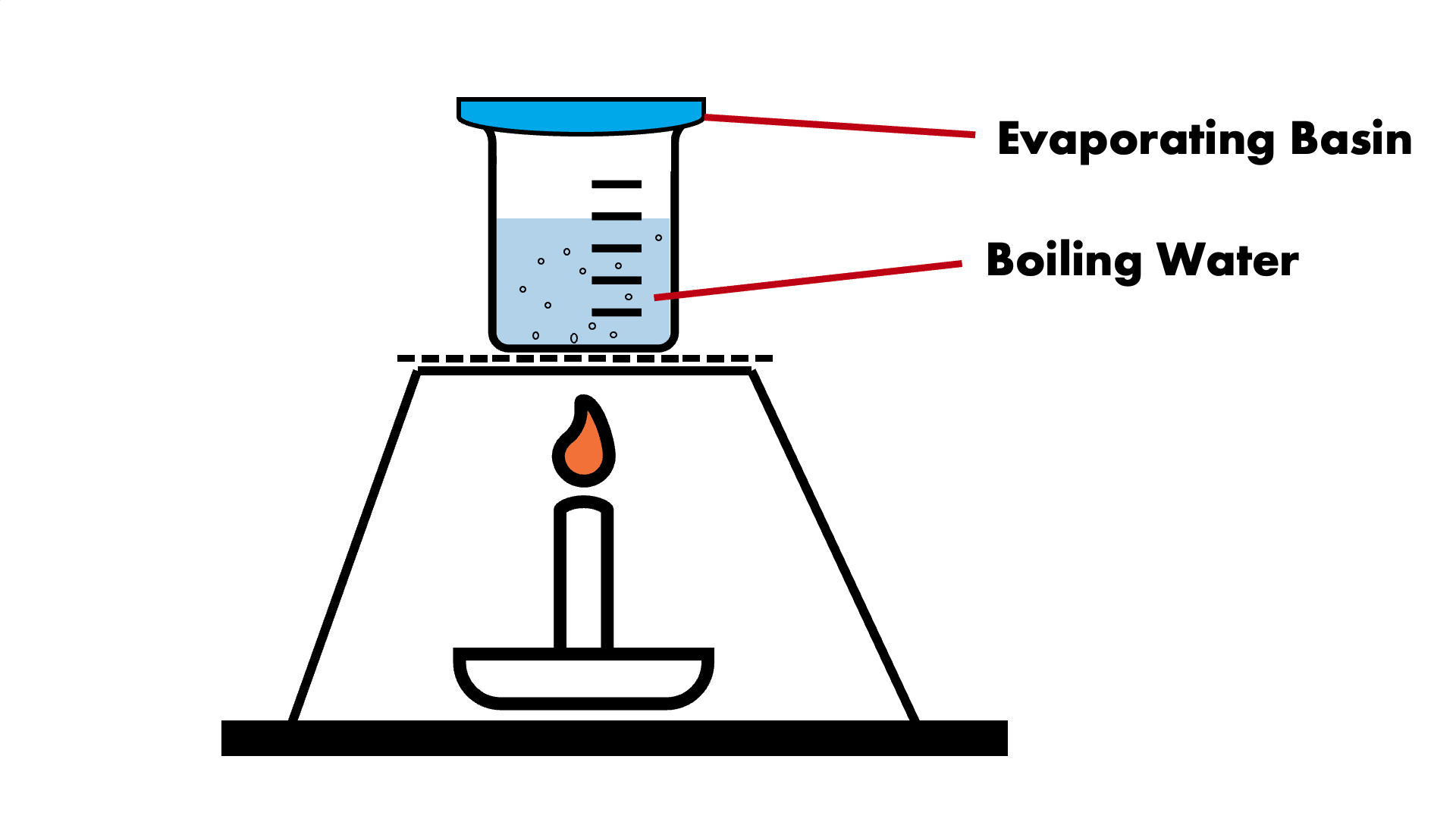
Evaporation
- Set up equiptment as shown
- Pour Copper Sulfate solution into Evaporating Basin
- Turn on Bunsen Burner
- Heat until Copper Sufate solution halves
Safety Concerns
- Risk of burns and fire from Bunsen Burner
6
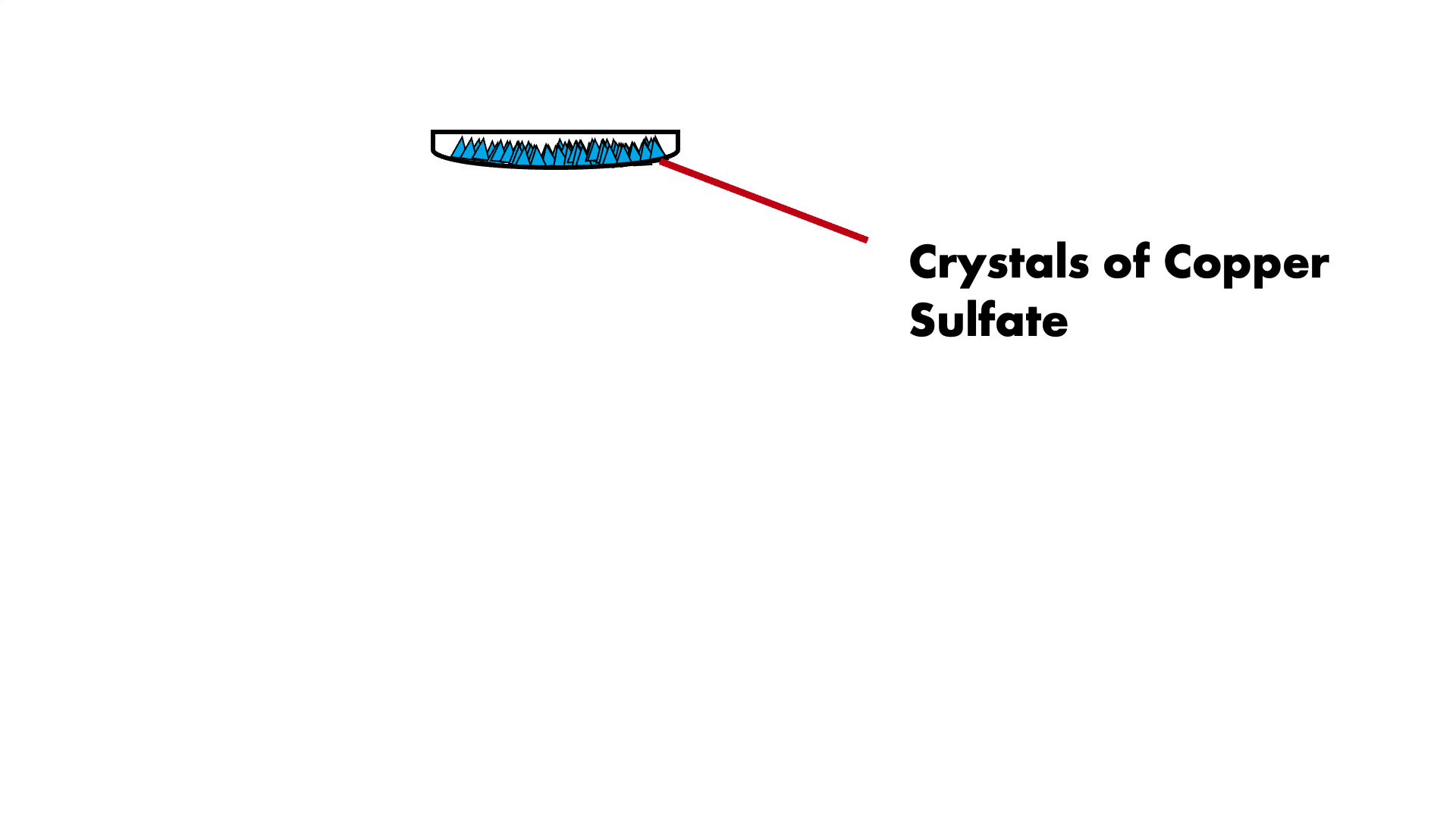
Crystallisation
- Leave Evaporating Basin to cool until crystalls form