Purifying Water Practical
1
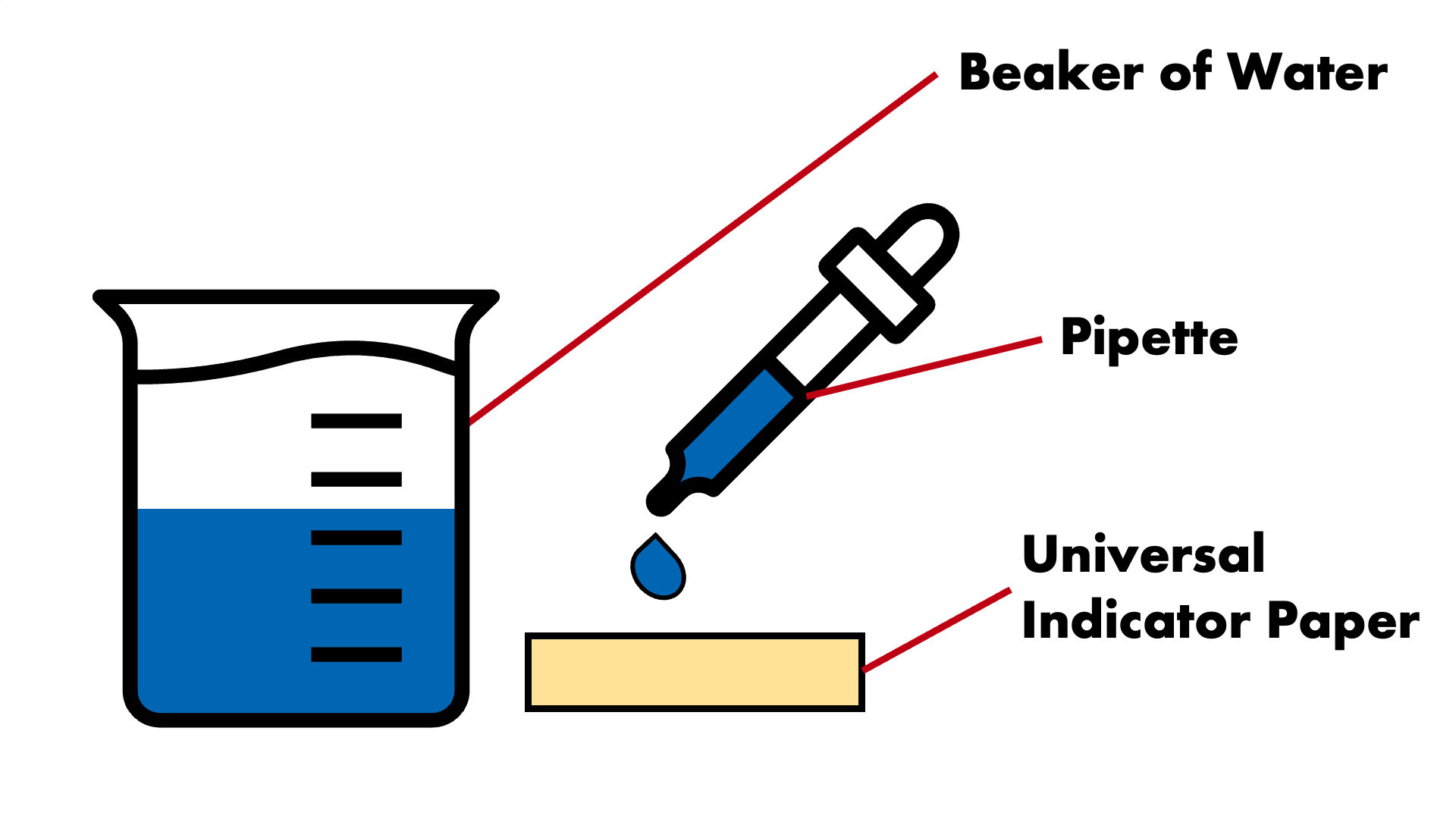
Analysing Water - pH
- Place a droplet of water onto a piece of universal indictor paper
- If the paper does not turn green, then the water is definitely not pure, if the paper does turn green, then the water could be pure
Safety Concerns
- Do not drink the water
2
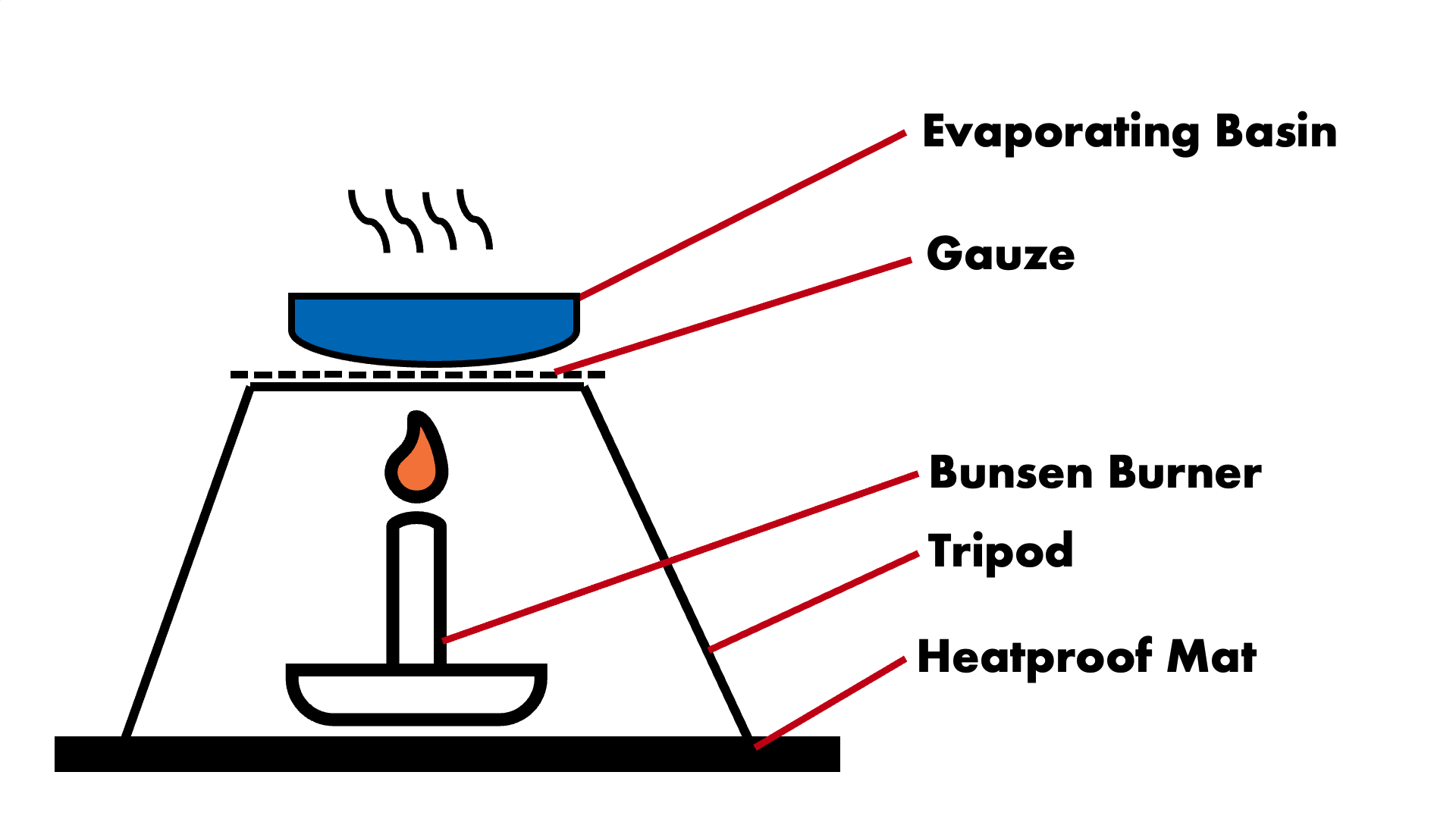
Analysing Water - Purity - Measure and record the mass of an empty evaporating basin using scales
- Set up a Bunsen Burner on a heat-proof mat, with a tripod and gauze over it
- Place the evaporating basin on the gauze and fill it with water
- Light the Bunsen Burner and wait for all of the water to evaporate
- Once all of the water has evaporated, measure the mass of the evaporating basin. If it is the same as the initial measurement, the water is pure, however, if it is heavier than the initial measurment, then dissolved solids have been left behind, meaning that the water is not pure
Safety Concerns
- Risk of burns and fire from Bunsen Burner
3
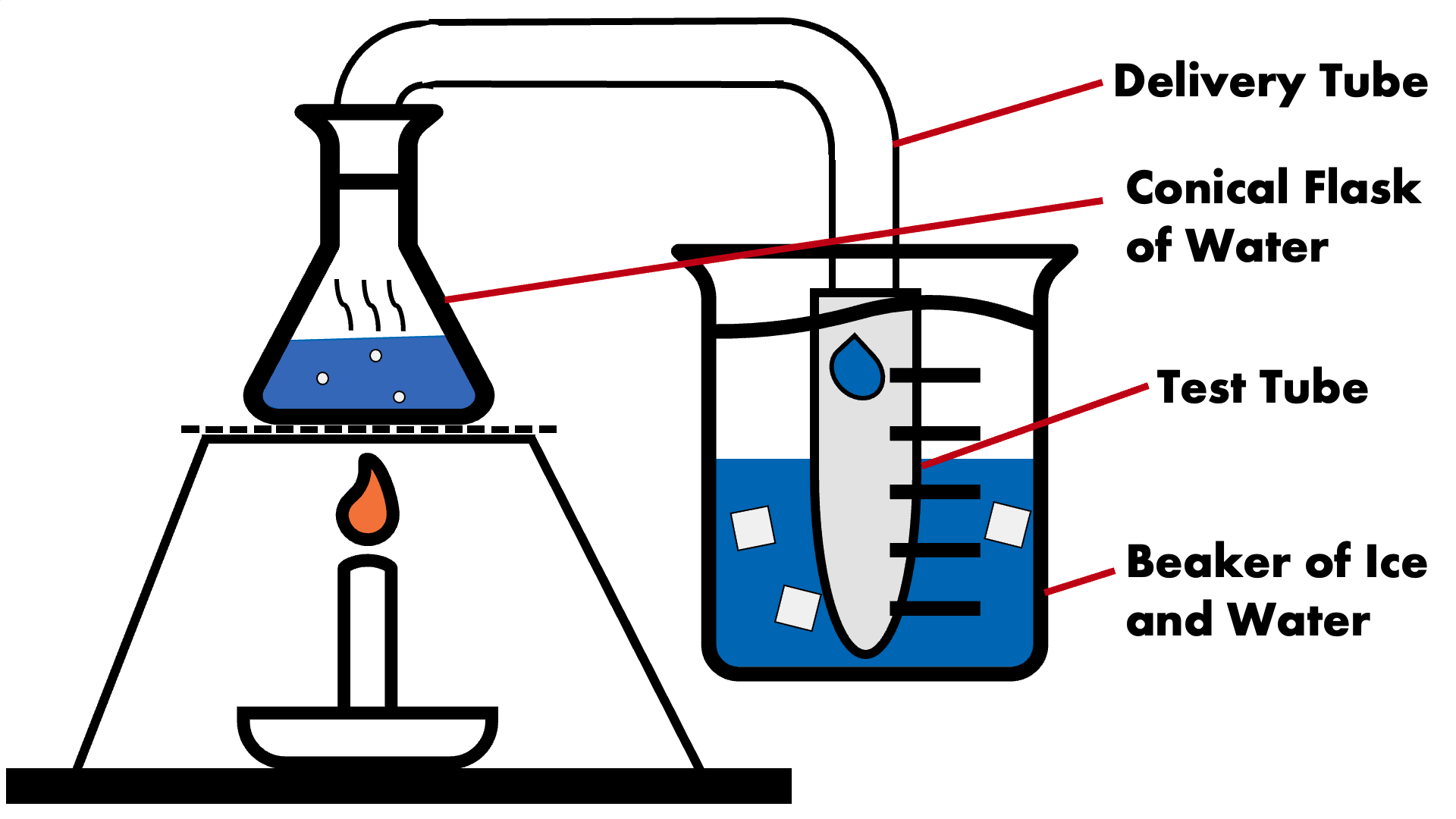
Purifying Water - Set up a conical flask of water on a gauze on a tripod over a bunsen burner on a heatproof mat. Fill the flask with a small volume of water, then place a bung in the top and a delivery tube feeding to a test tube which should be sumburged in a beaker of water and ice
- Turn on the bunsen burner, heating the water until it starts to boil
- When the water starts to boil, reduce the heat to a gentle boil
- Once enough water has condensed in the test tube, turn off the bunsen burner
Safety Concerns
- Do not drink the water
- Risk of burns and fire from Bunsen Burner