Salts Practical
1
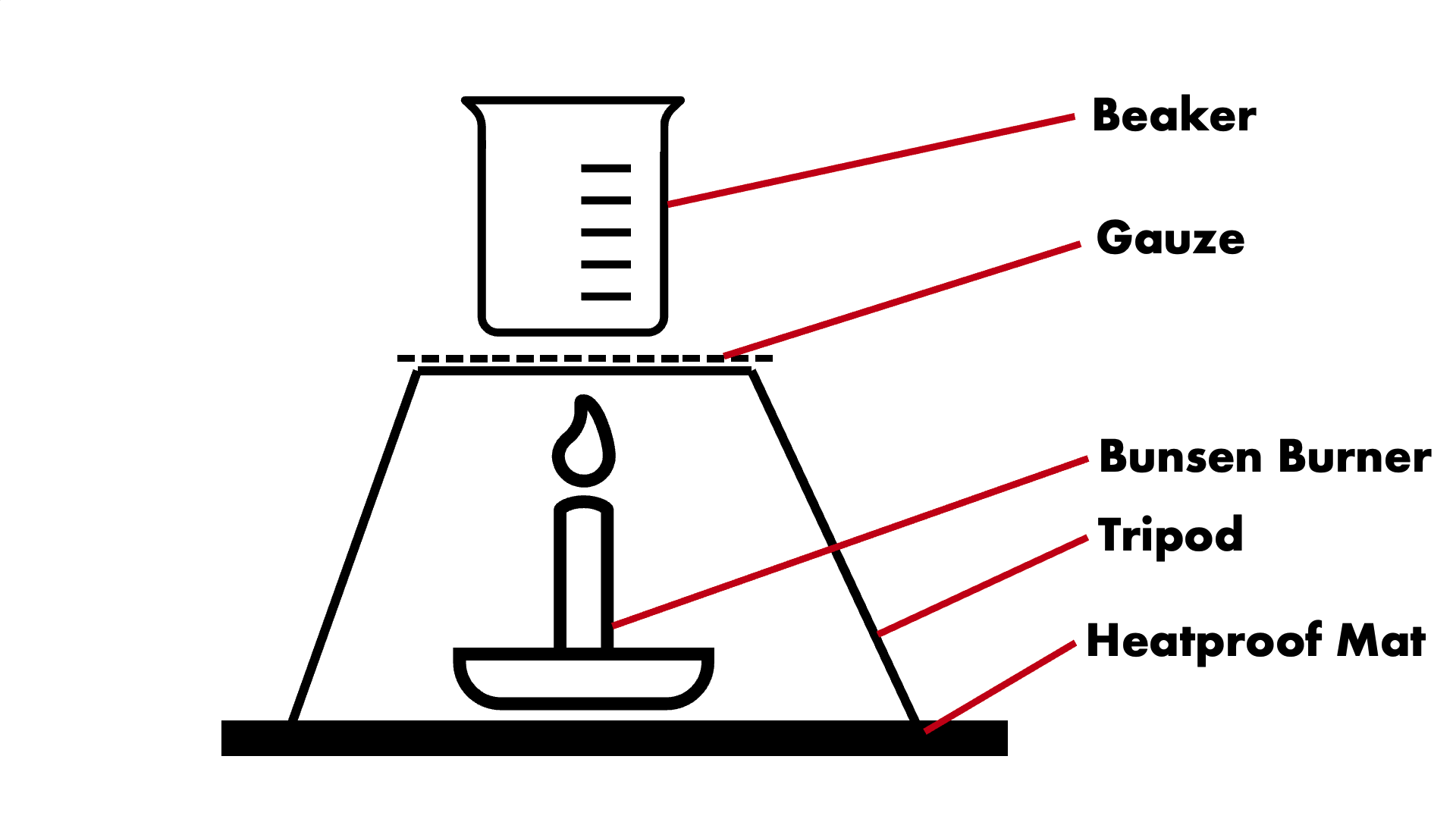
Equipment Setup
You will need: A beaker, Gauze, Tripod, Bunsen Burner, Heatproof Mat, Filter Paper, Evaporating Basin, Glass Rod
2
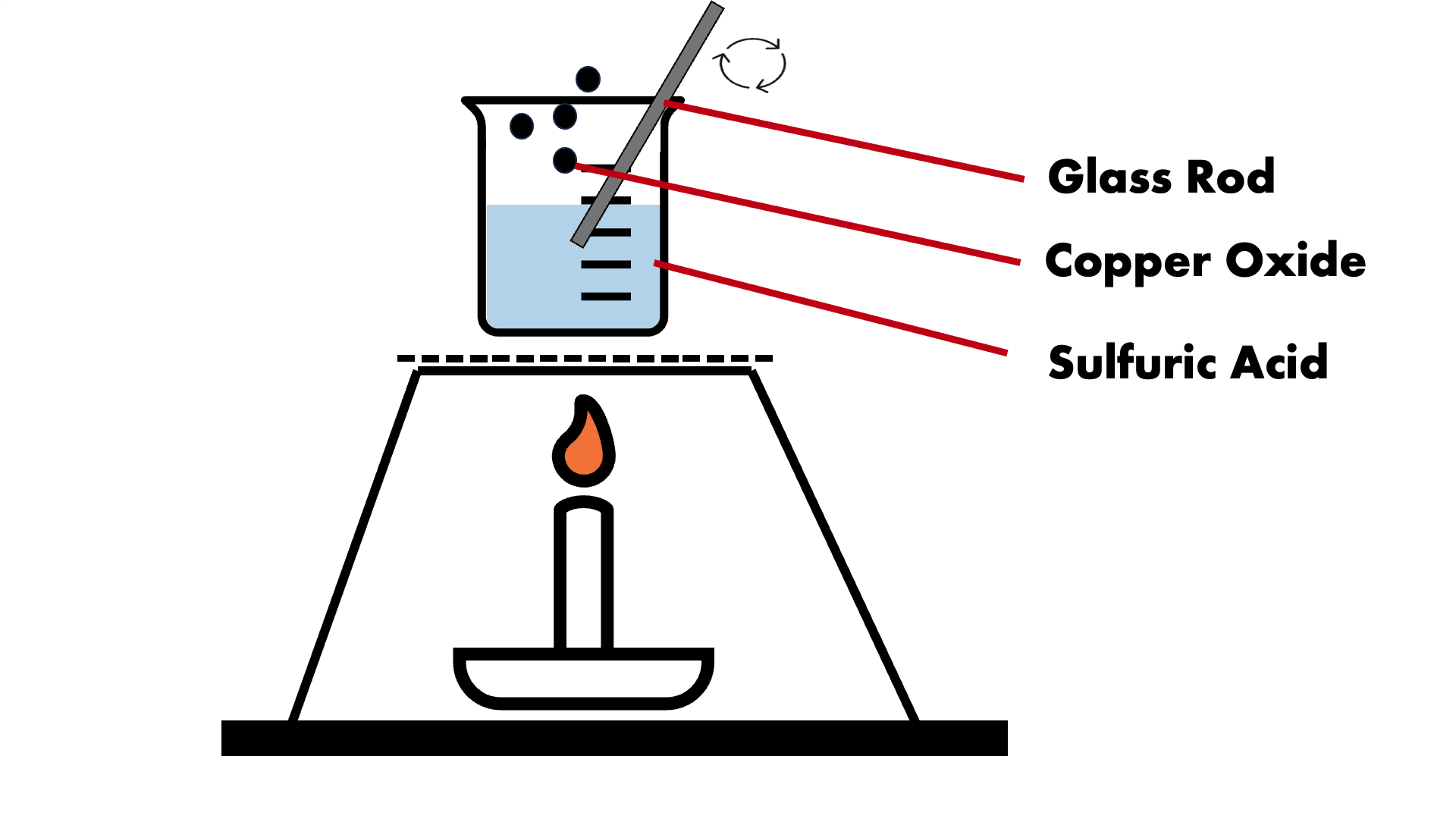
Making Copper Sulfate
- Pour Sulfuric Acid in to beaker
- Light the Bunsen Burner
- Add Copper Oxide to Sulfuric Acid
- Mix solution with a glass rod
Safety Concerns
- Sulfuric Acid is corrosive
- Take caution when using Bunsen Burner
- Glass can smash
3
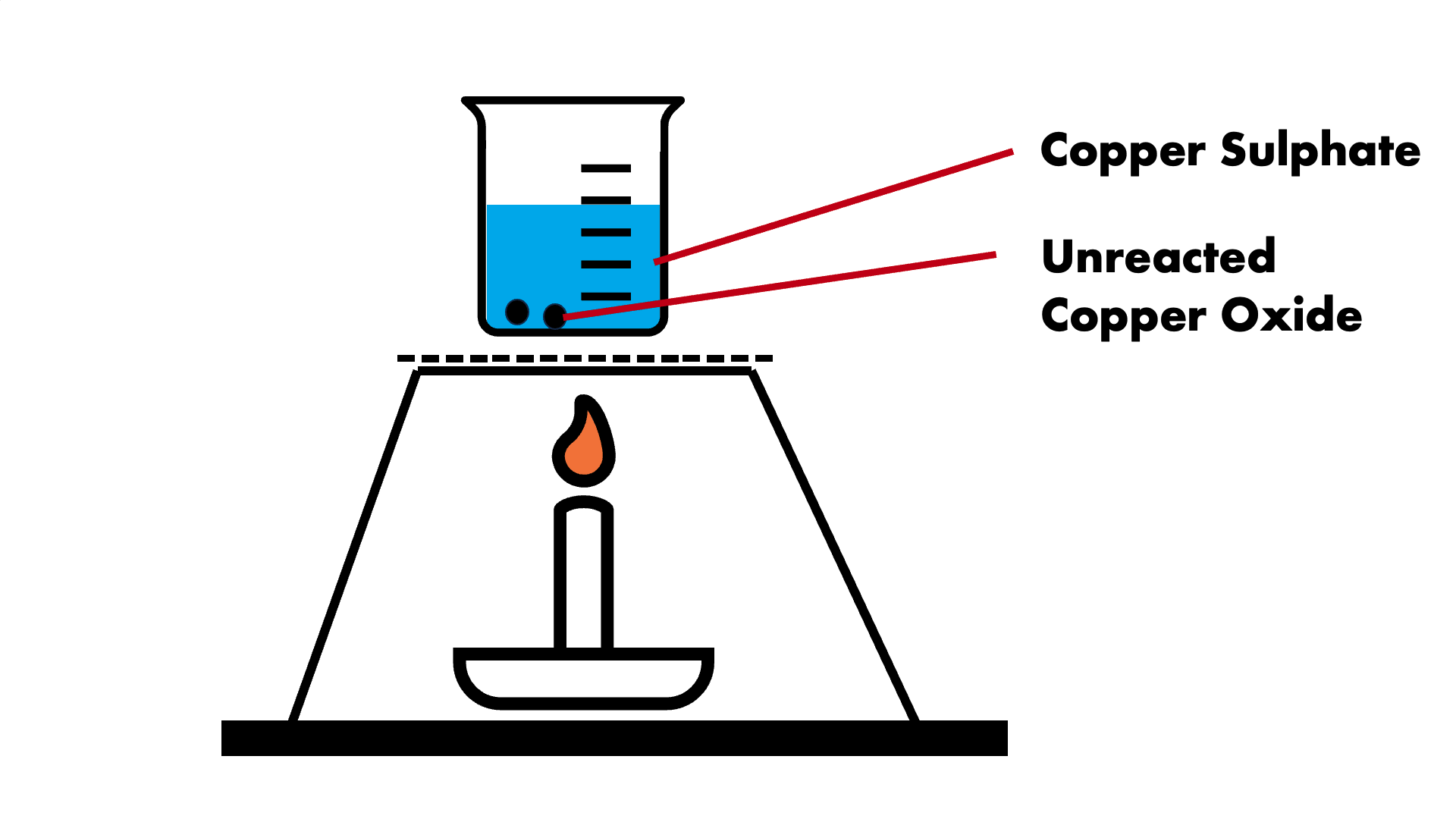
Completion of ReactionOnce solution turns blue and no more Copper Oxide will react, Copper Sulfate solution is formed.
4
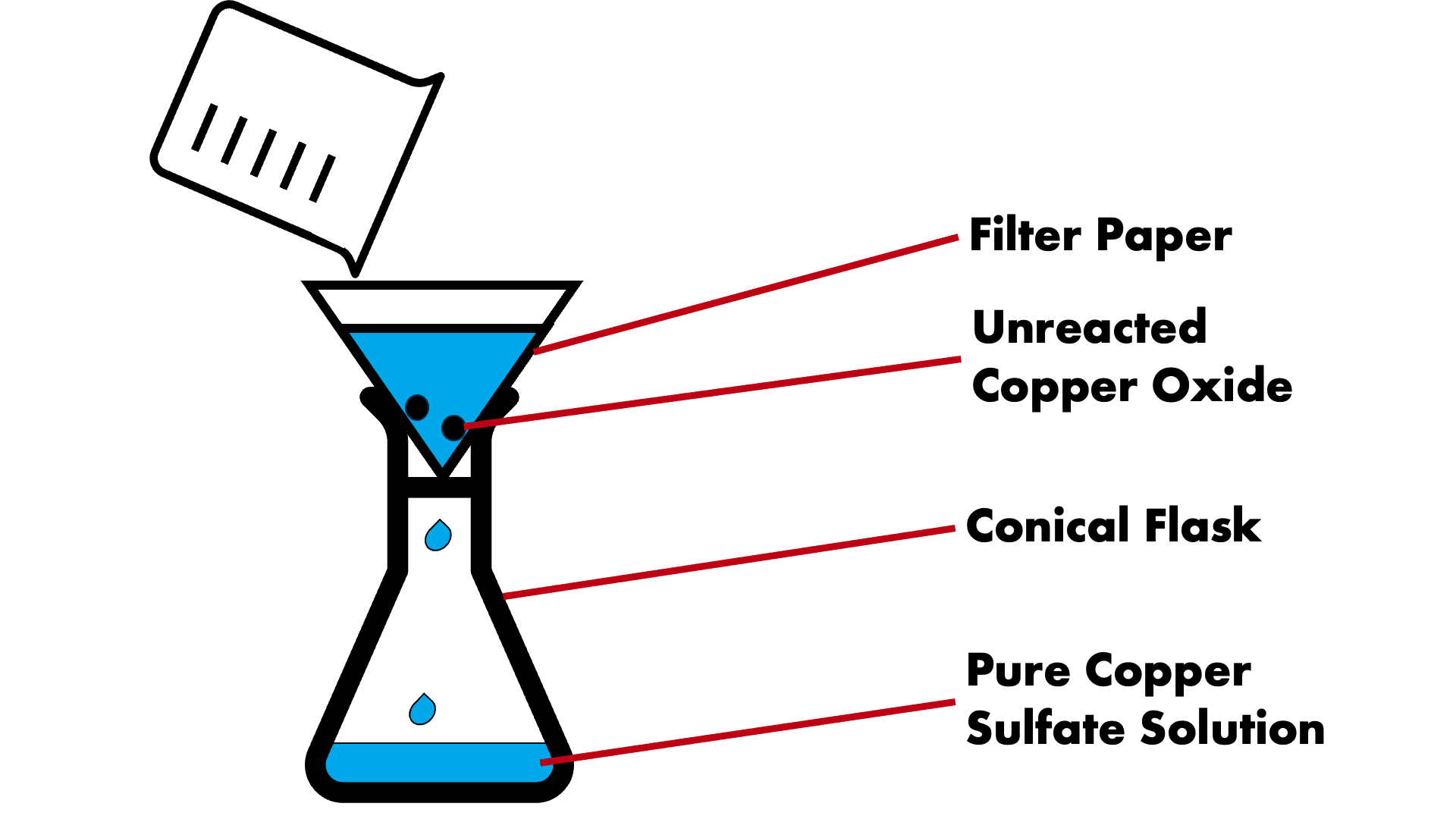
Filtration
- Set up equiptment as shown
- Pour Copper Sulfate solution into filter paper to separate Copper Oxide from Copper Sulfate
5
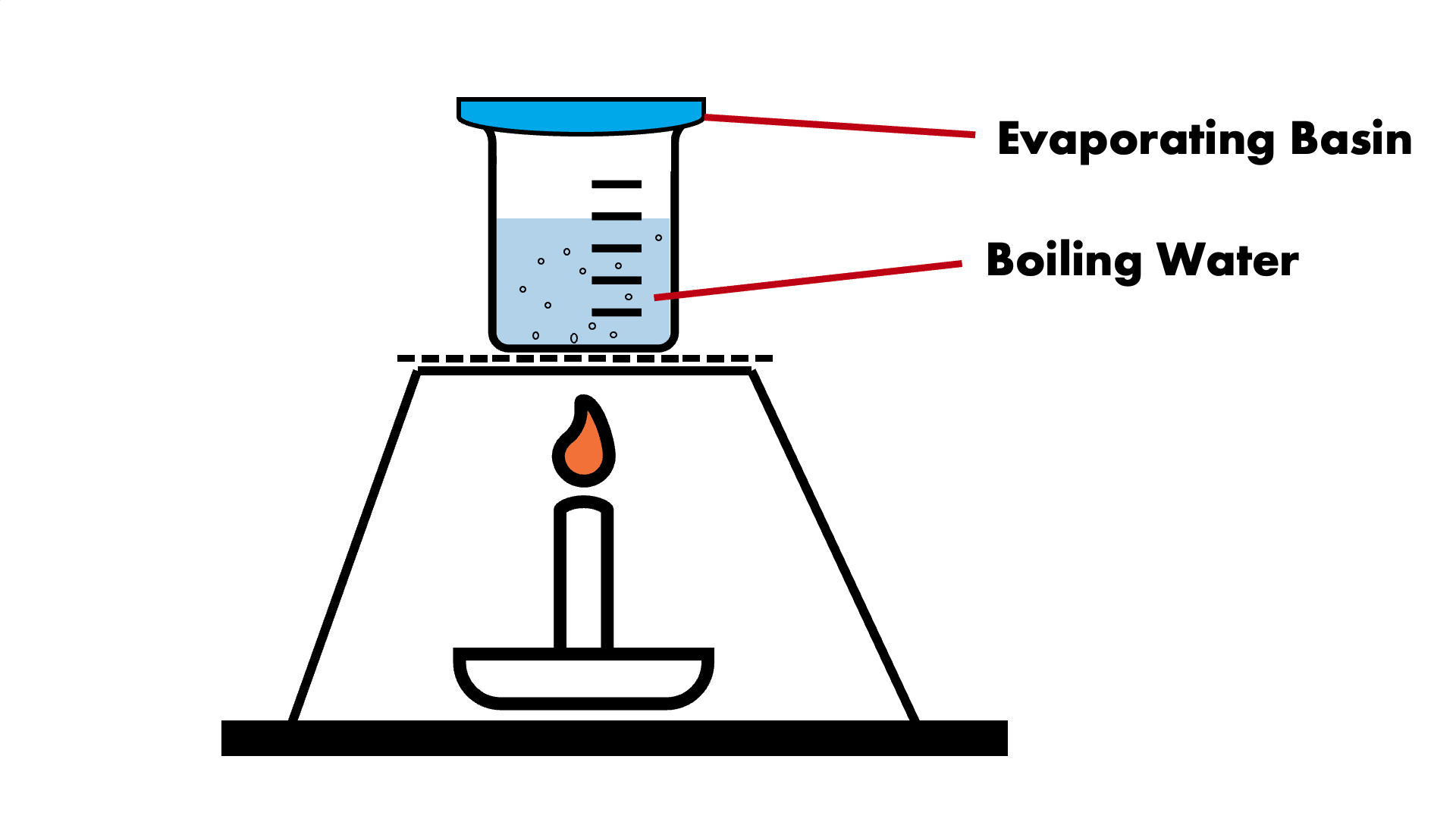
Evaporation
- Set up equiptment as shown
- Pour Copper Sulfate solution into Evaporating Basin
- Turn on Bunsen Burner
- Heat until Copper Sufate solution halves
Safety Concerns
- Risk of burns and fire from Bunsen Burner
6
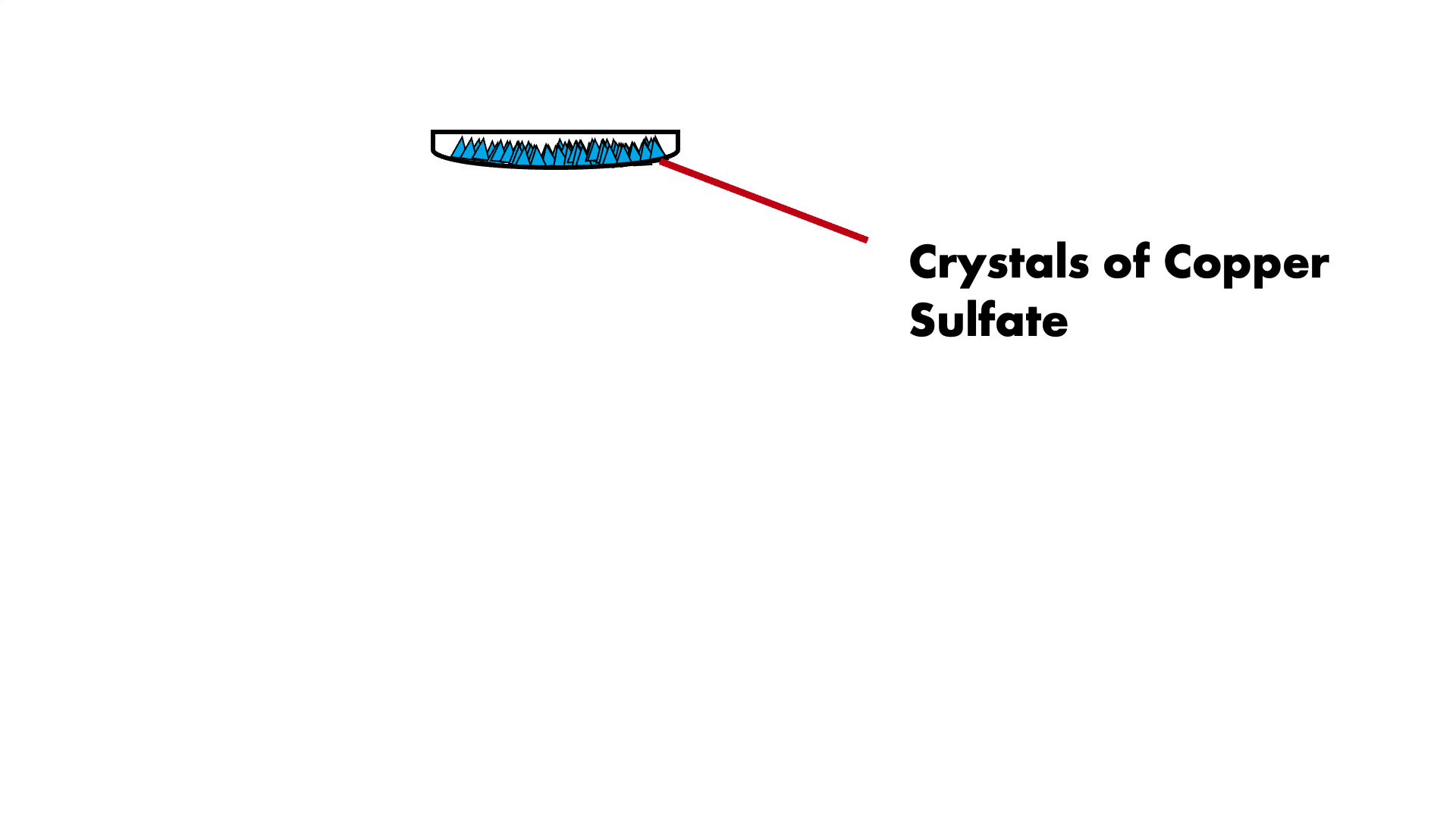
Crystallisation
- Leave Evaporating Basin to cool until crystalls form
Titration (Neutralisation) Practical
1
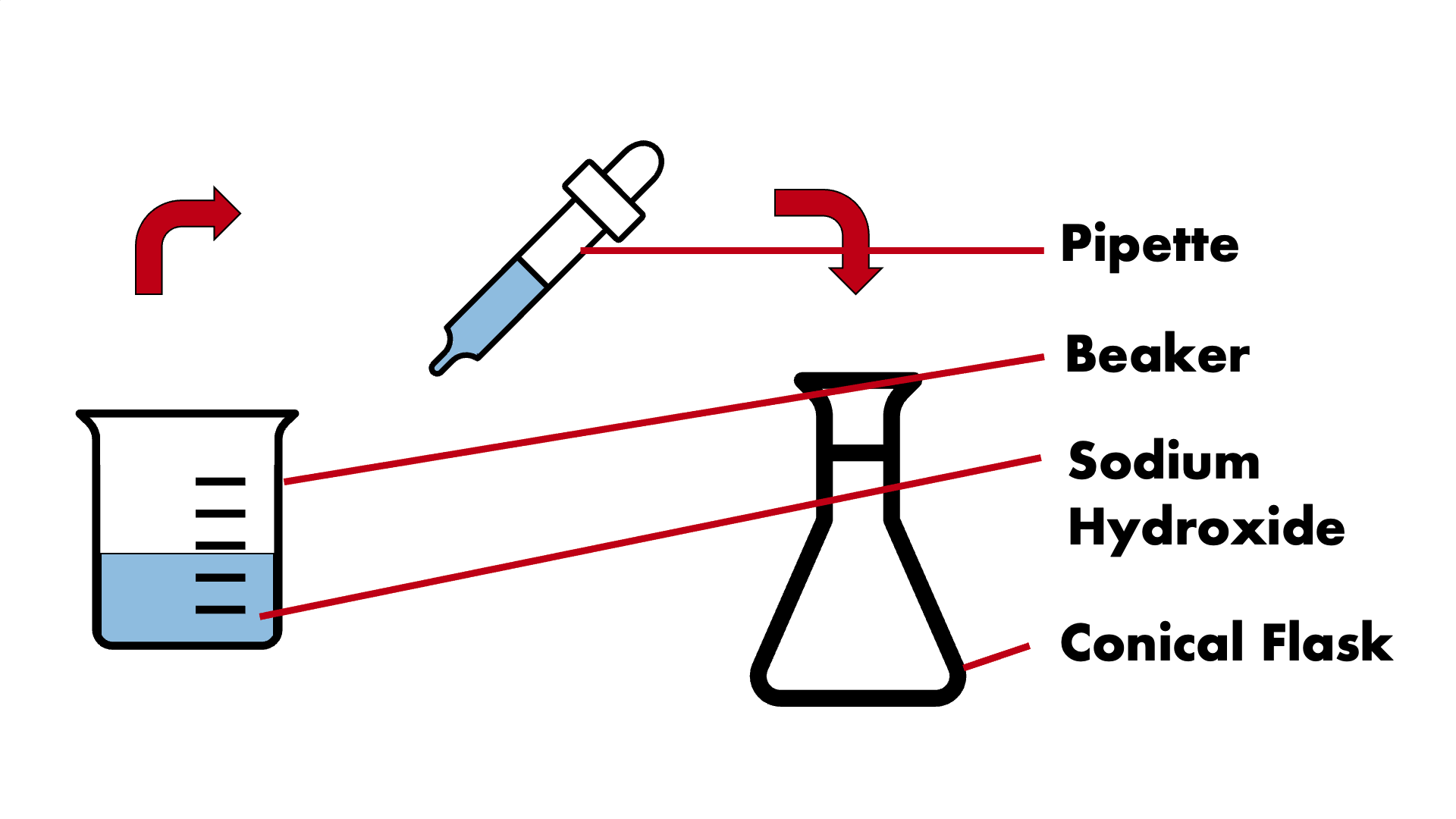
Solution Transfer
- Using a pipette, transfer 25cm3 of Sodium Hydroxide Solution into a Conical Flask
Safety Concerns
- Sodium Hydroxide is corrosive
2
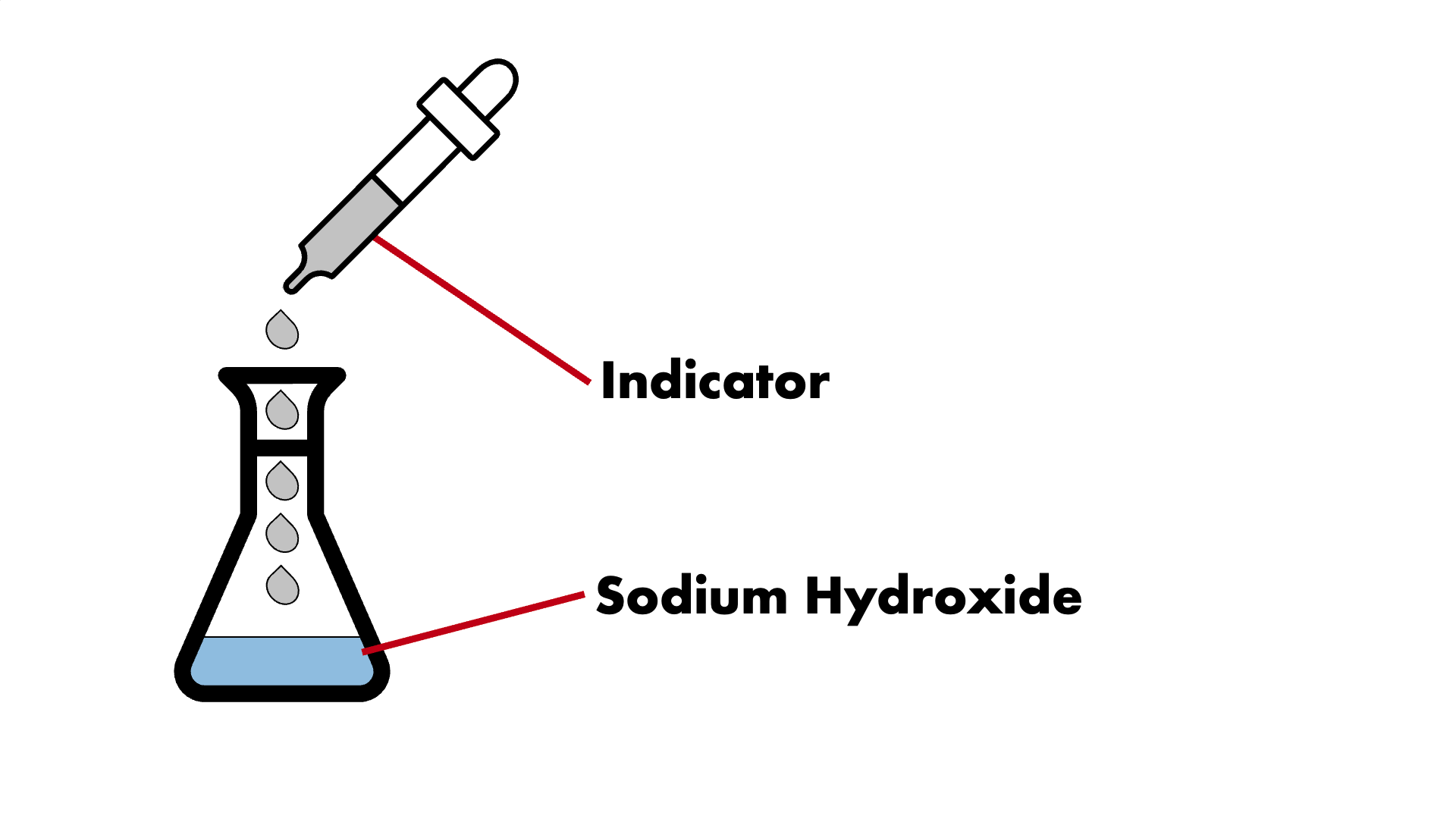
Adding Indicator - Add 5 drops of an indicator (such as Mythyl Orange or Phenolphthalein) to the Sodium Hydroxide solution
3
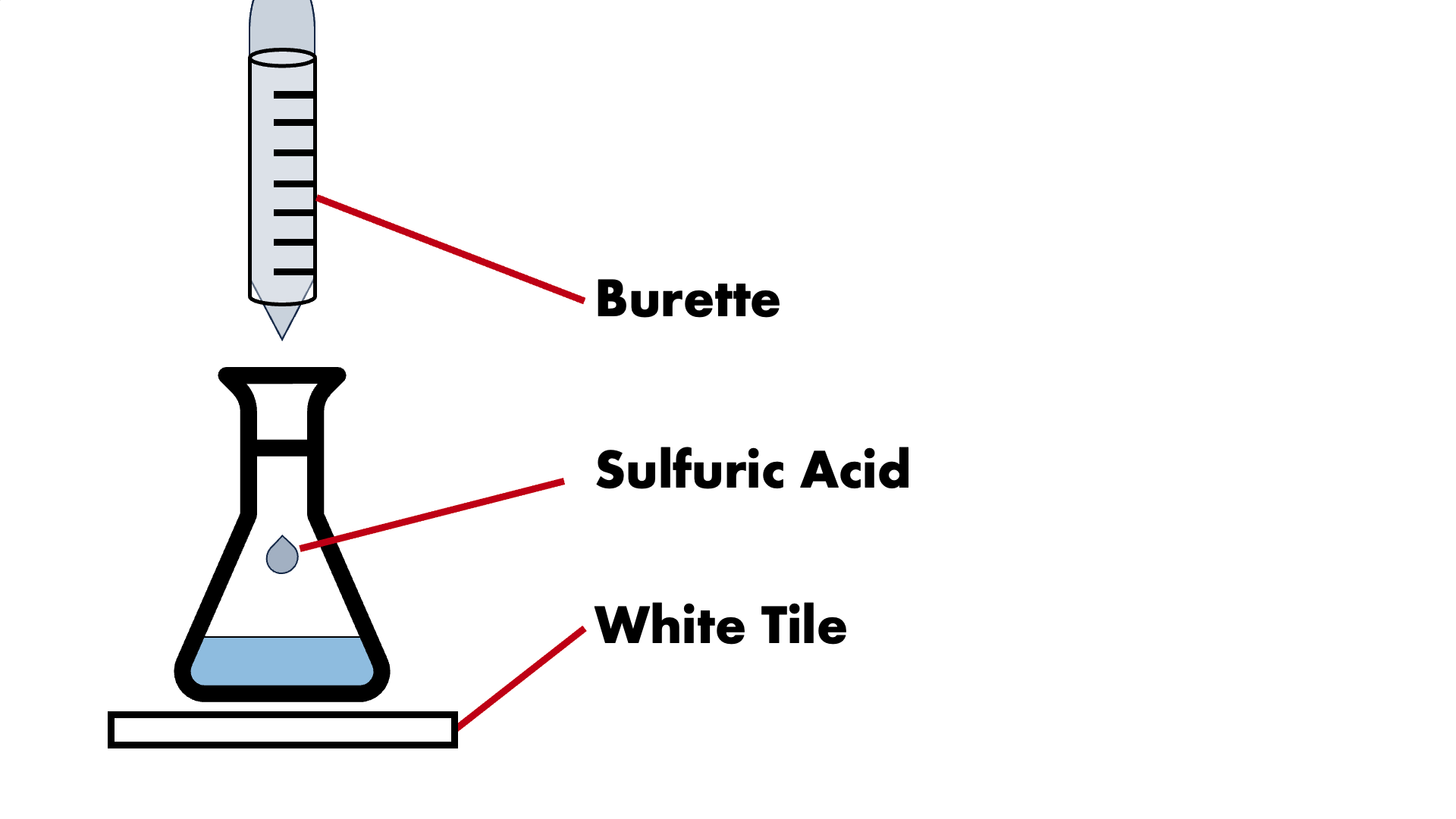
Neutralisation - Place Conical Fask on a White Tile. This will allow for easier observations of the incoming colour change
- Fill a Burette with Sulfuric Acid
- Slowly and carefully, allow the Burette to drip Sulfuric Acid into the conical flask until the start of a colour change is observed
- Once the colour changes, now add the acid drop by drop until the solution is neutral. If using methyl orange, the solution will turn red when neutral.
- Once neutral, stop adding acid. Record the volume of acid added from the Burette. Make sure to read from the meniscus.
Electrolysis Practical
1
Equipment Setup
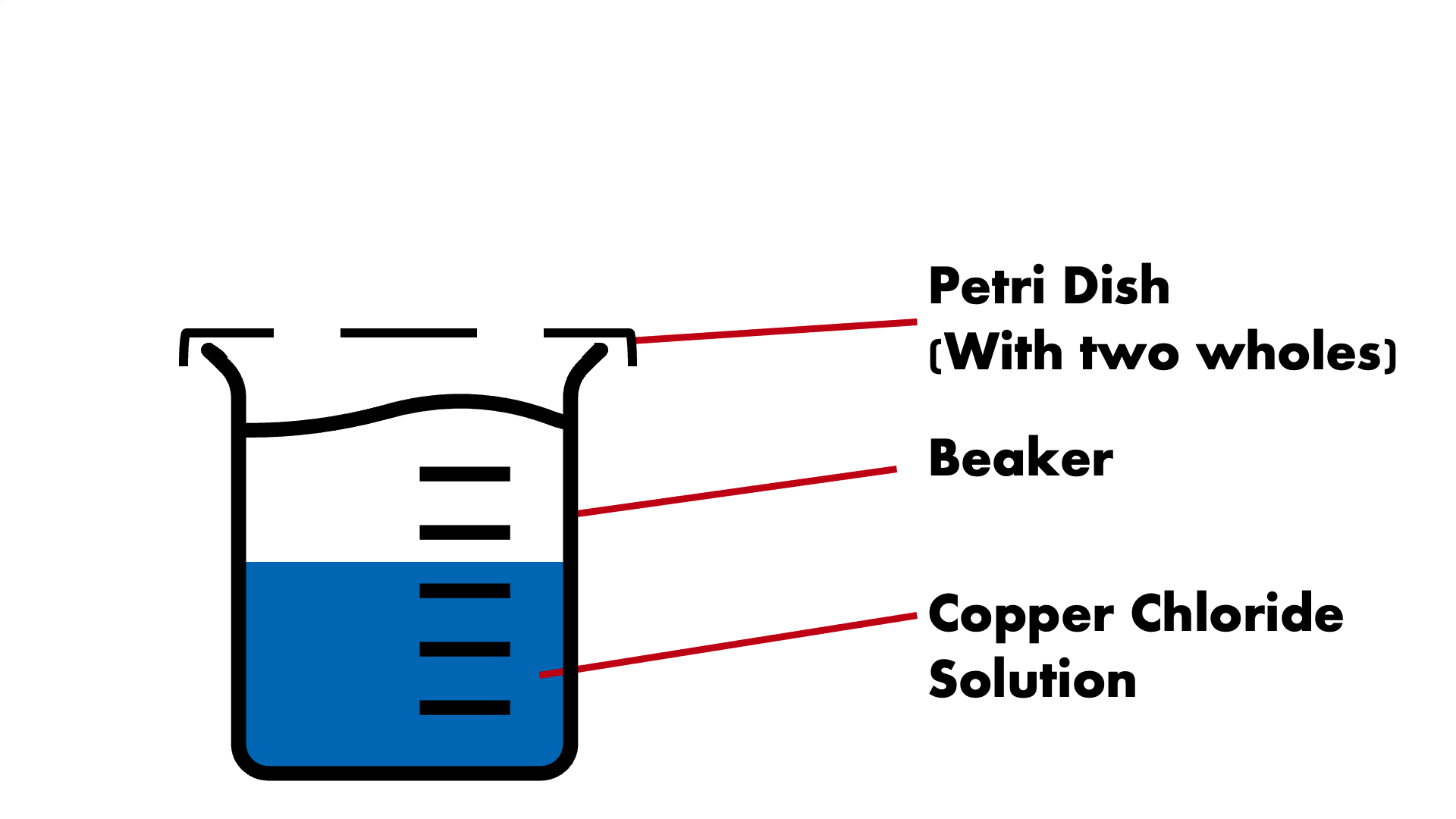
- Take a beaker
- Add approximatley 50cm3 of Copper Chloride Solution to the Beaker
- Place a Petri Dish with two holes in it on top of the beaker
2
More Setup
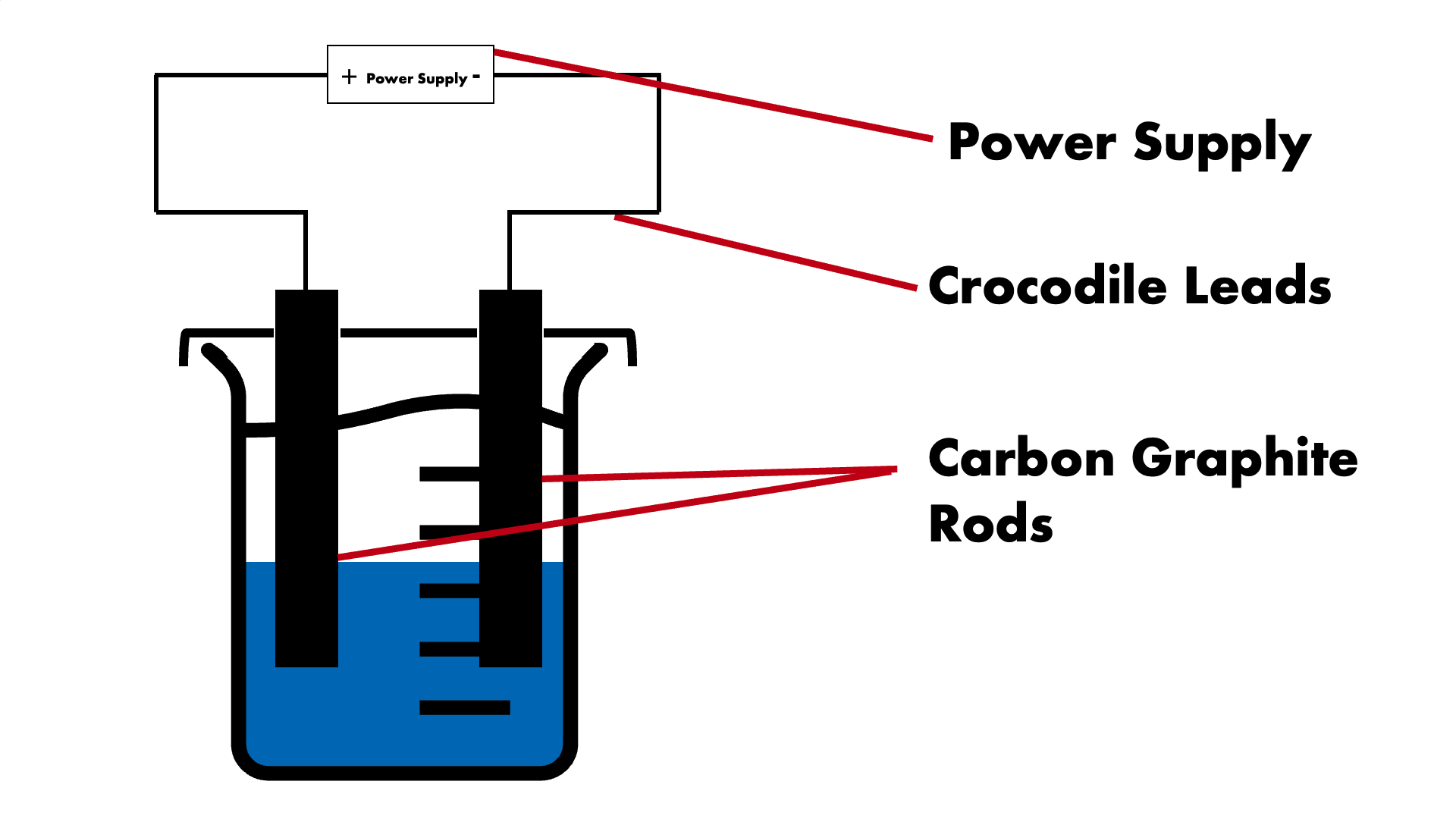
- Insert 2 Carbon rods into the holes on the top of the Petri Dish
- Connect Crocodile Leads to the Carbon rods and a power supply
3
The Reaction
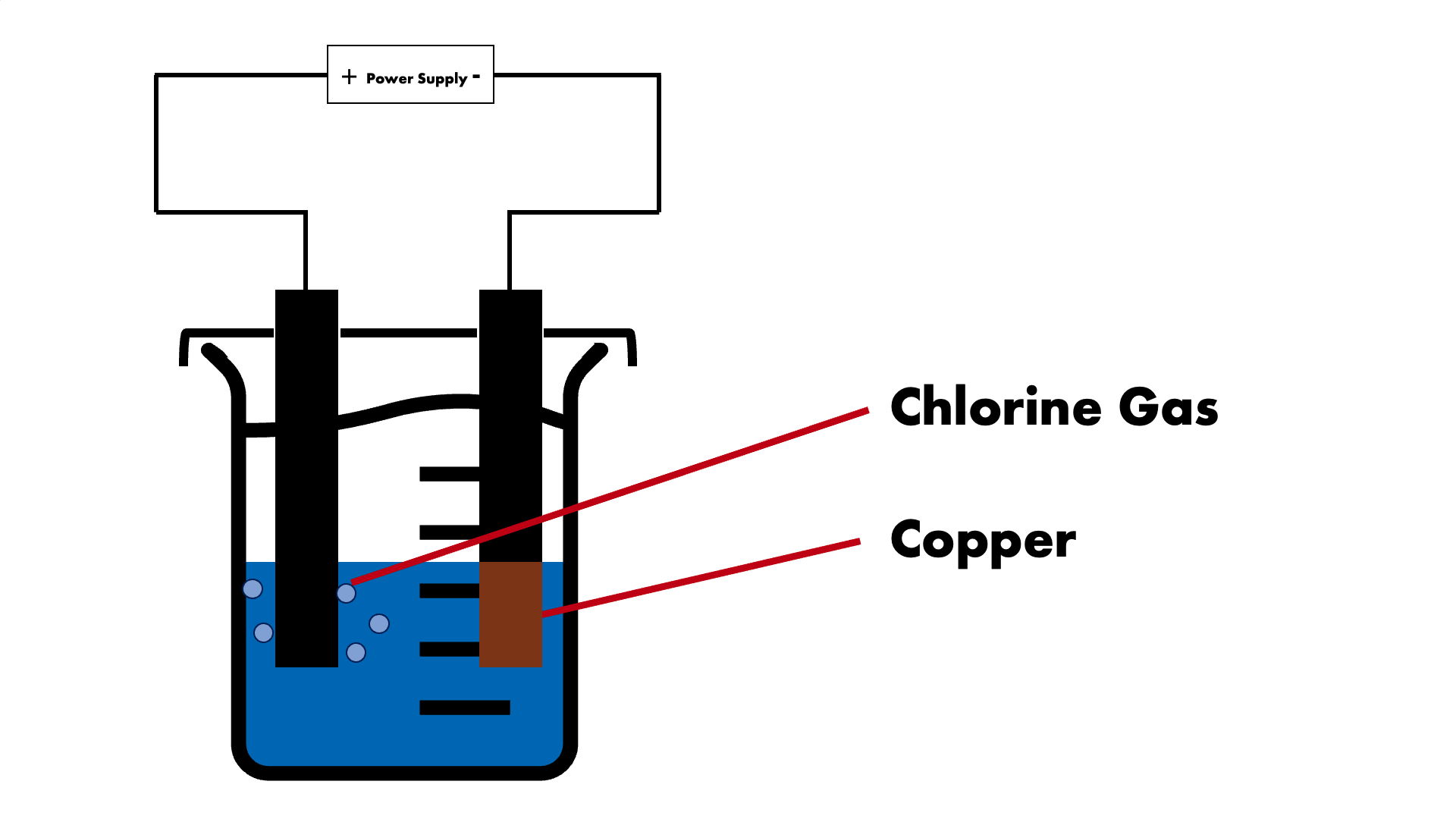
- Set the power supply to 4V and turn it on
- Observe electrodes. For this experiment, Chlorine gas will be produced at the anode and Copper will coat the cathode