Ripple Tank Practical
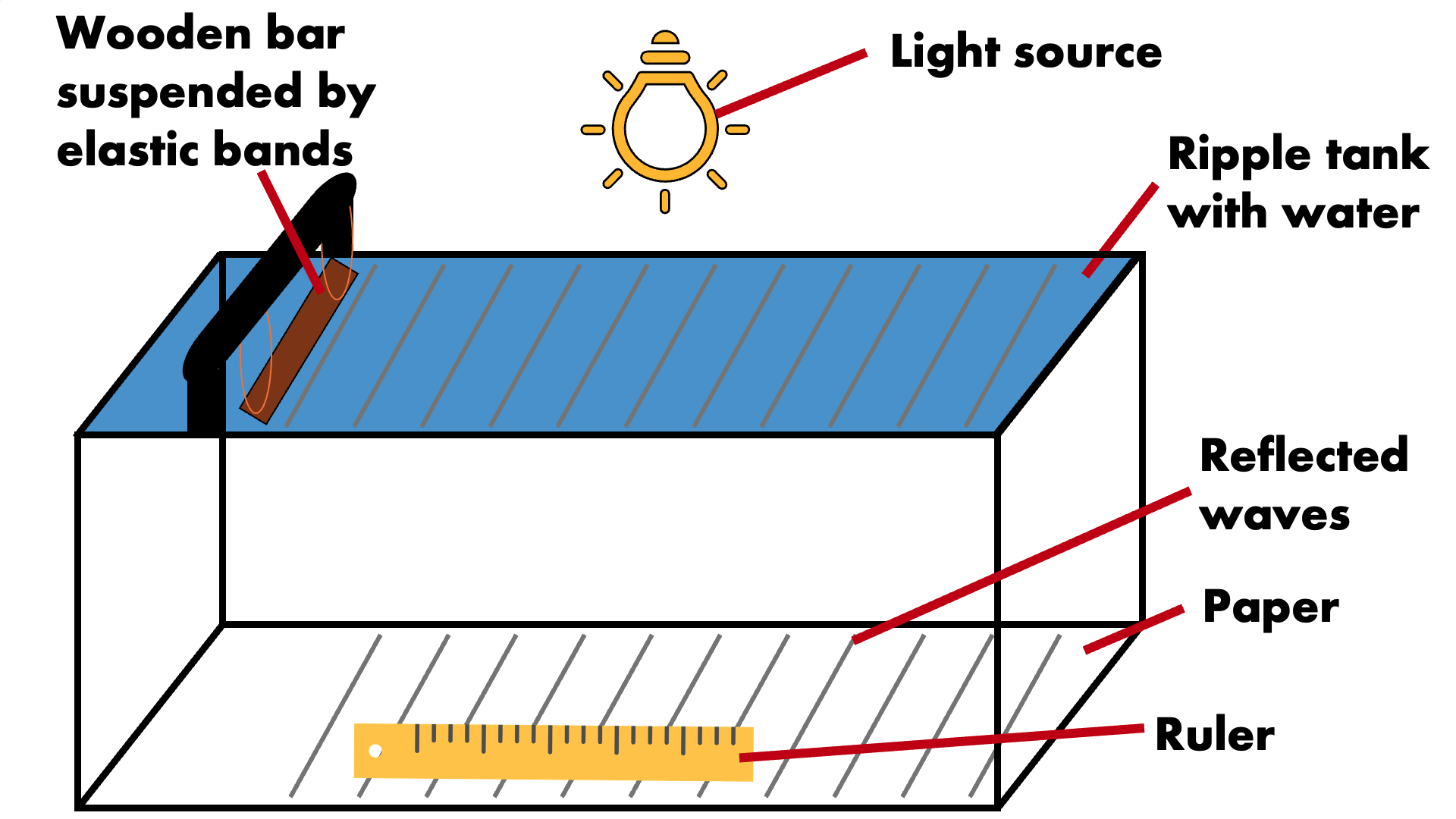
- Set up a ripple tank over a piece of paper
- Shine a light source through the ripple tank
- Turn off the lights in the room and shut the curtains, ensuring that the room is dark
- To measure wavelengths, place a ruler on the piece of paper perpendicular to the wave fronts. Measure the distance between as many wavefronts as possible and divide by the number of waves
- To measure frequency, count the number of wavefronts that pass a point in 10 seconds and divide the result by 10
- Caculate wave speed using the equation:
Wave speed = wavelength × frequency
Safety Concerns
- Do not stare directly at light source
Waves in a Solid Practical
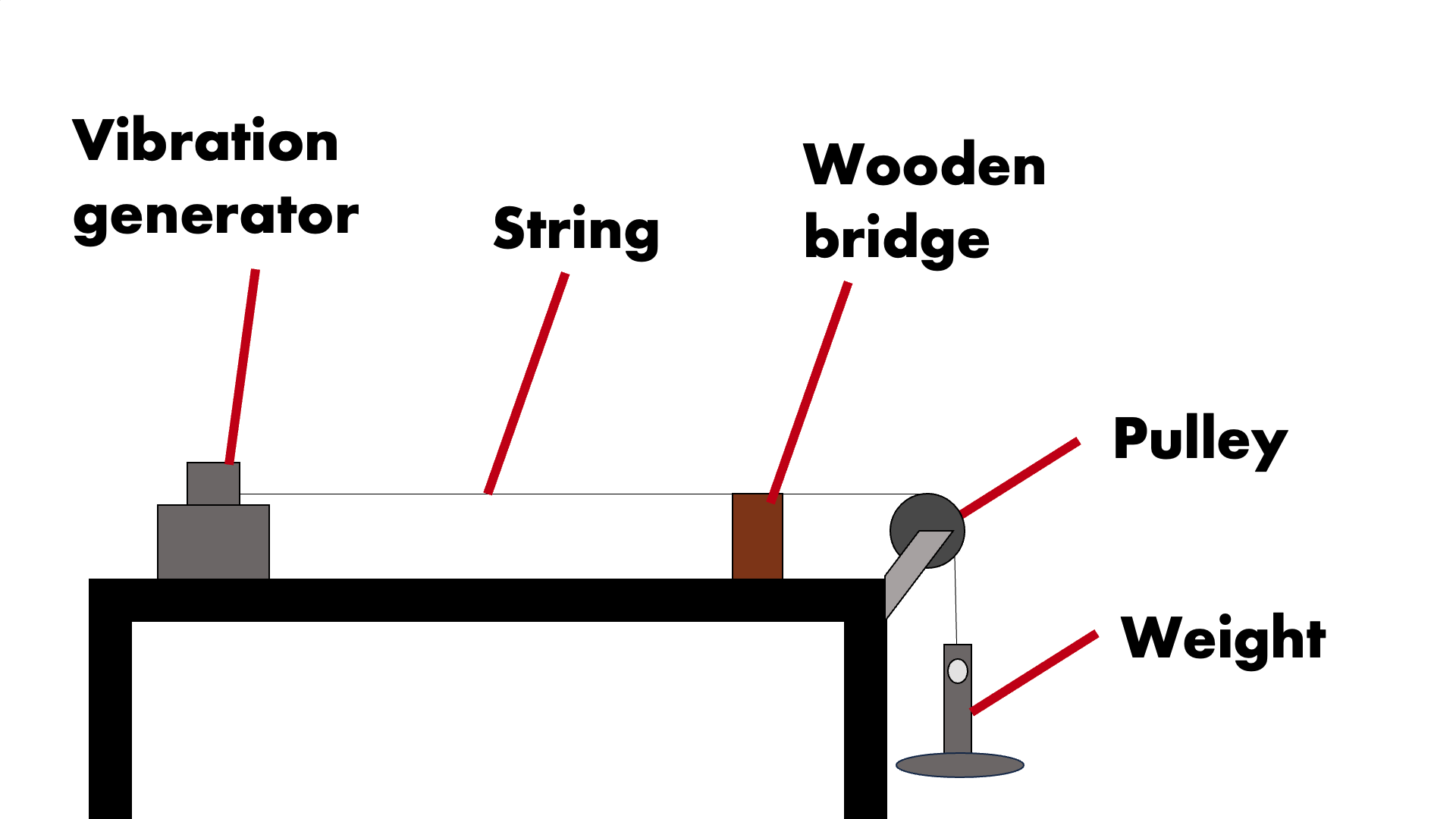
- On a table, set up a string running over a pulley and wooden bridge, attached to a vibration generator and a weight
- Turn on the vibration generator and adjust the frequency until the string begins to vibrate only vertically
- To measure wavelength, use a meter ruler to measure the distance between multiple standing waves, and divide the result by the number of waves measured
- To measure frequency, use a timer to time the amount of time it takes for 10 oscillations. Divide the result by 10 to find the time period, then use the equation:
Frequency = 1/time period - Find the wave speed using the equation:
Wave speed = wavelength × frequency
Safety Concerns
- The string may snap